
Criminal Cases in the Cleveland County Courts
Cleveland County criminal cases are divided by court level, not by city. Superior Court hears felony trials. District Court ordinarily handles misdemeanors and infractions, along with early felony proceedings. Both courts belong to North Carolina's General Court of Justice. The elected Clerk of Superior Court maintains their Cleveland County files, while Prosecutorial District 39's district attorney represents the State. A Shelby, Kings Mountain, or Boiling Springs police case does not remain in a separate municipal criminal court because North Carolina has no local municipal criminal courts.
The official North Carolina eCourts service provides the remote starting point for public case summaries, hearings, judgments, and available documents. Its Cleveland County material reflects court events after a charge reaches the judicial system. The portal is not the arresting agency's incident report and does not certify a criminal history. That distinction matters when a booking label differs from the charge the prosecutor ultimately files.
The eCourts overview shows how statewide court services connect to Cleveland County.
The service image helps place the local docket within the statewide court system rather than a stand-alone county database.
Cleveland County Court Case Assignments
The court assignment gives context to each Cleveland County case record. Superior Court judges may be reached through the courthouse at 704-476-7816, while District Court judges use 704-476-7812. The Clerk's main line is 704-476-7800. A magistrate handles initial judicial process, probable-cause matters, and release conditions at 704-476-7819, with an after-hours line at 704-480-2892. The District 39 district attorney's Cleveland office is at 314 East Marion Street in Shelby and can be reached at 704-476-7810.
Those offices do not all hold the same record. The Clerk is the custodian for filed pleadings, entries, judgments, and copies. The magistrate's work may become part of the case path, while the district attorney makes prosecution decisions. The public defender at 315-B Patton Drive represents qualifying appointed clients but is not a public-record custodian. Knowing the role prevents a caller from asking an office for a document it does not maintain.
How to Search Case Records
The best Cleveland County search starts with a full case number or a careful party-name query. Anonymous public access is allowed in eCourts Portal, and registration is not needed for a basic search. Smart Search carries the Register of Actions. Search Hearings is better for a current date or courtroom, while Judgment Search supplies judgment index entries. Follow this channel-complete sequence:
- Open Smart Search and enter a party name or the Enterprise Justice case number. Select Cleveland County as the location and Criminal Actions as the category.
- Use a date of birth, case type, status, or filing range to narrow a broad result. Wildcards require at least three last-name letters or one first-name letter before the asterisk.
- Open the case summary and read assignments, events, hearings, dispositions, and financial entries together. Use Search Hearings if the next court date is the main question.
- Try a public terminal at the Clerk's office when victim or witness searching, older material, or a missing online document calls for courthouse access.
- Request paper or certified material from the Cleveland County Clerk. Use Form AOC-CR-314 and the $25 process for a certified single-county name search.
The official Portal training resources document the fields and wildcard rules used for Cleveland County court records.
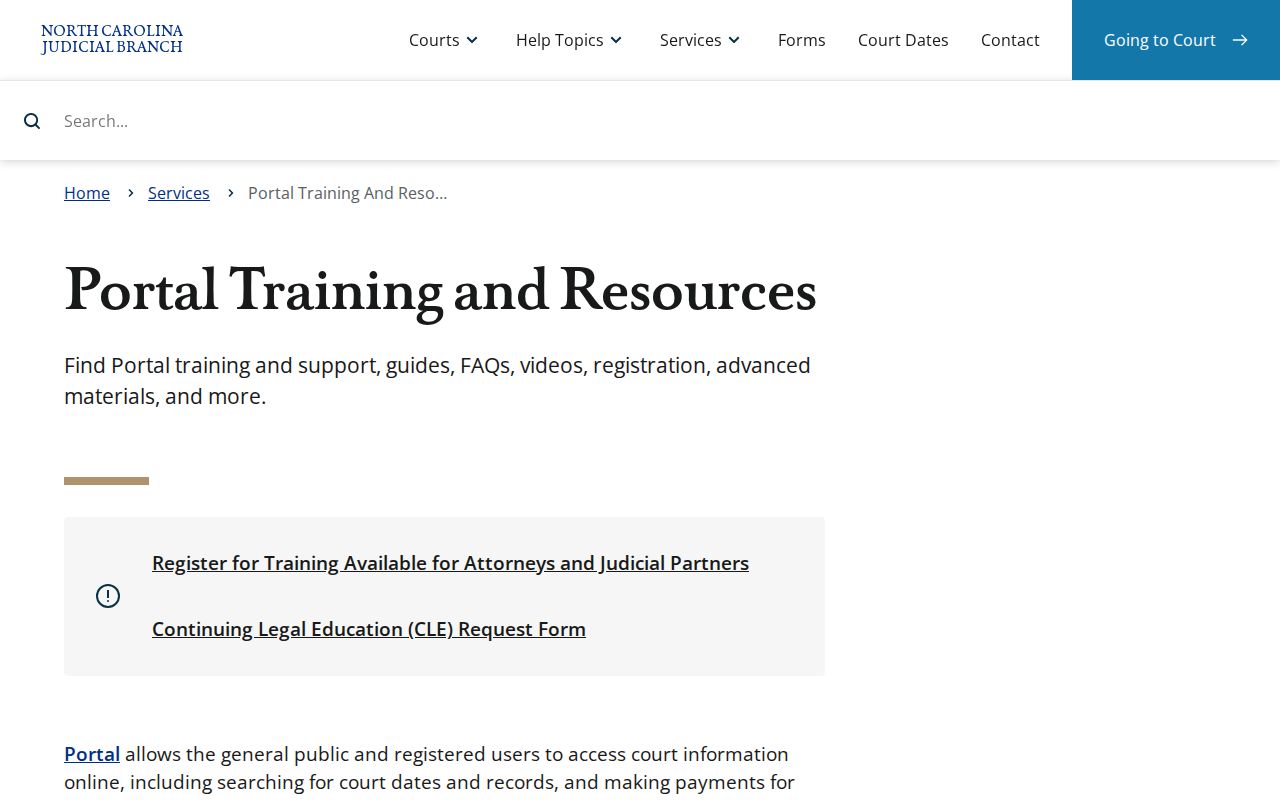
This view supports a deliberate query using location, category, status, and date filters instead of an unfiltered name search.
| Field Label | Type | Required | Use in Cleveland County |
|---|---|---|---|
| Case Number or Party Name | Text | Yes for basic search | Primary Smart Search input; wildcard rules apply |
| Location | Filter | No | Select Cleveland County to avoid other counties |
| Date of Birth | Date | No | Advanced party criterion; public display may be limited |
| Case Category and Type | Filters | No | Select Criminal Actions, then narrow by available type |
| Status or Filing Range | Filter/date range | No | Separates active and disposed files or limits filing dates |
Cleveland County Portal Case Records
A Smart Search result is a map of the Cleveland County court file, not a verdict by itself. The Register of Actions can display case information, assignments, parties, events, dispositions, hearings, and financial information. A blank section may mean that no data exists there. Victims do not appear in party-search results. Converted legacy events can display 12:00 a.m. when the old record carried no event time, so that timestamp should not be read as a midnight hearing.
Search Hearings accepts a case number, party or business name, attorney name or bar number, judicial officer, and courtroom. Judgment Search can return a case number, disposition status, index date and time, parties, and comments. Return to Smart Search for the broader summary. If a document is too large for online delivery, the official guidance directs the reader back to the Clerk for smaller files or another copy route.
What the Case File Shows
A Cleveland County criminal case file tracks what the court received and did. It can answer whether a charge was filed, when hearings occurred, how the charge changed, and how the court disposed of it. It does not automatically include every witness interview, evidence item, or investigative note created by police. The Judicial Branch record-access instructions explain Portal, courthouse terminals, paper files, and copies.
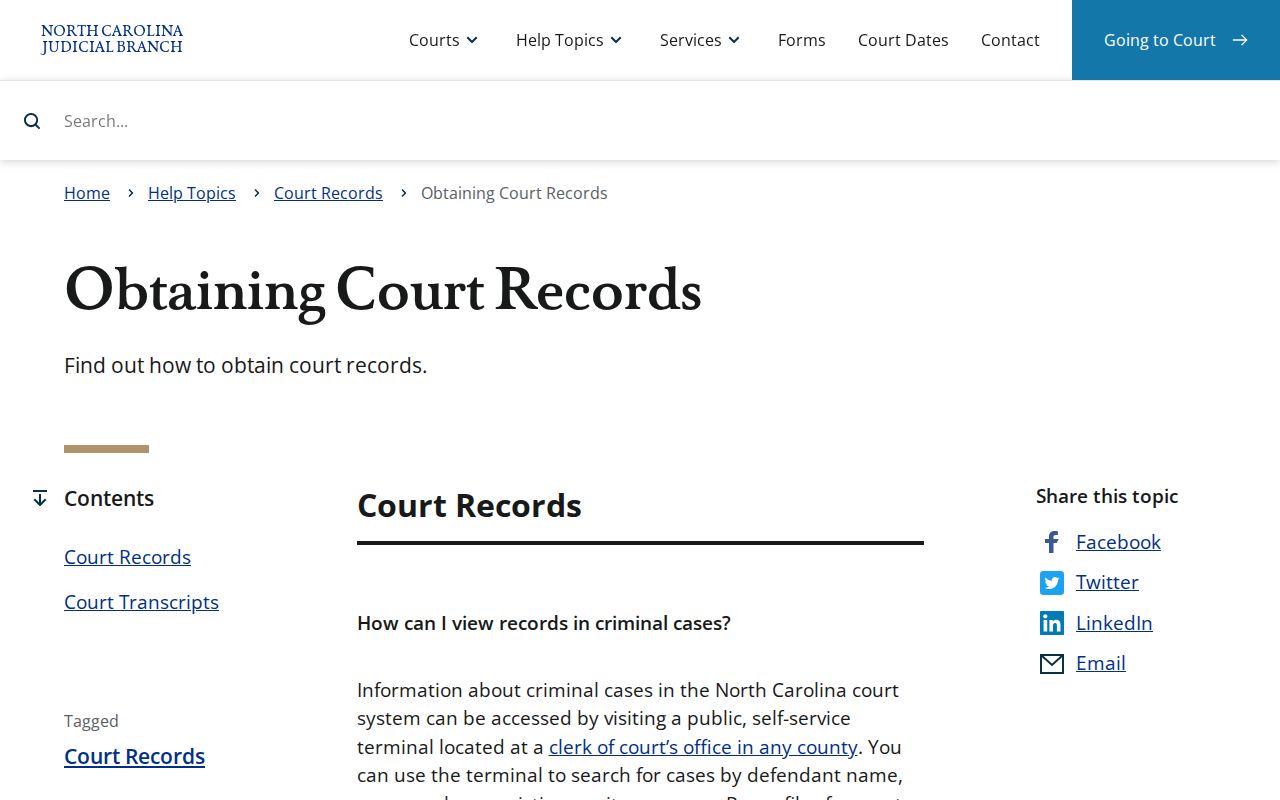
The pictured options reinforce that remote access and the original Cleveland County paper file are two views of the same court process.
| Case Number and Court | Identifies the Enterprise Justice file, Cleveland County location, and assigned court level. |
|---|---|
| Charging Document | States the filed accusation, which may differ from the earlier booking charge. |
| Docket Entries | Chronological filings, court events, assignments, and action dates. |
| Hearing Dates | Scheduled or completed proceedings, courtroom details, and judicial officer when public. |
| Disposition and Judgment | Shows dismissal, plea, verdict, conviction, acquittal, or another recorded outcome. |
| Sentence and Conditions | Records the court's ordered consequence, financial items, probation, or confinement terms when public. |
Cleveland County Court Record Terms
Short docket labels can hide large differences in outcome. Read each Cleveland County charge separately, then match the disposition and judgment to that count. A dismissal ends the charge without a judgment of guilt, but the record may remain public unless an expunction applies. A conviction is a judgment of guilt after a plea or verdict. An acquittal is a not-guilty result after trial.
- Arraignment
- The proceeding where the formal charge is presented and the plea is addressed.
- Indictment
- A formal felony accusation returned as a true bill by a grand jury.
- Disposition
- The recorded result of a charge, such as dismissal, acquittal, or conviction.
- Nolle prosequi
- The prosecutor's formal decision not to proceed with a charge at that time.
- Expunction
- A North Carolina court order removing a qualifying record under a specific statute.
Stages of a Criminal Case
A felony path in Cleveland County may begin with an arrest and magistrate process, move through District Court for early handling, and reach Superior Court after prosecutor review and a grand-jury indictment. A misdemeanor usually remains in District Court. Pleas, motions, and scheduling can change the order or end a case before trial, so the docket must be read as an actual timeline rather than a fixed promise of what happens next.
Case flow: Charges Filed → Arraignment → Pretrial → Plea or Trial → Disposition → Sentencing
District Court criminal trials are generally heard by a judge. Superior Court felony trials ordinarily permit a jury. If an appeal is filed, the resulting entry becomes another part of the Cleveland County record. To understand the earlier law-enforcement stage, compare the docket with the county's arrest history channels, while keeping each custodian's record distinct.
Certified Cleveland County Case Checks
Portal is useful for research, but the North Carolina Judicial Branch directs certified background searches to the appropriate county clerk. The Cleveland County Clerk accepts Form AOC-CR-314 with a $25 fee for one certified county search. In person, the researched payment channels are cash, major credit or debit cards with a processing fee, money order, or certified check. Personal checks are not accepted. A mailed request should use a money order or certified check, never cash. The official certified-search instructions distinguish the clerk's product from a free Portal result.
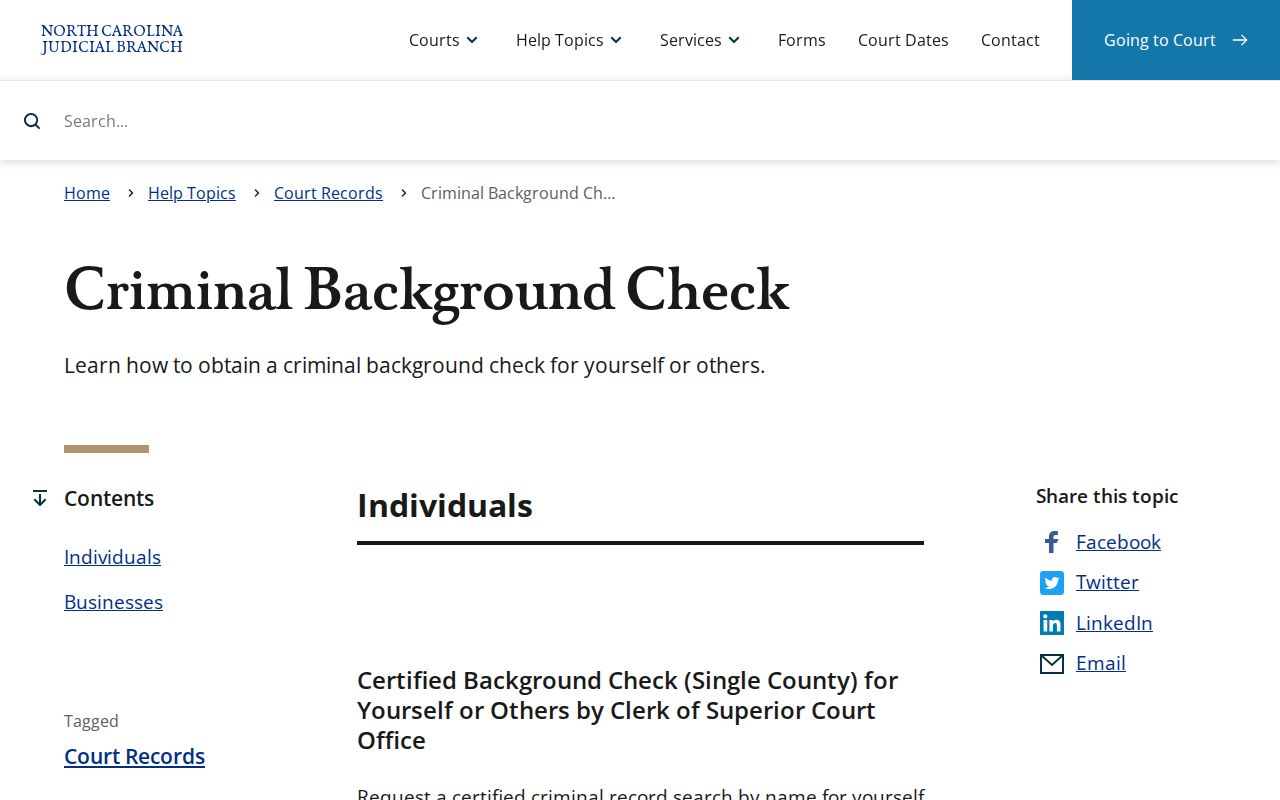
This process certifies a Cleveland County name search, not a fingerprint-supported statewide SBI record or a national history. The Cleveland County payment page gives the court's current payment routes.
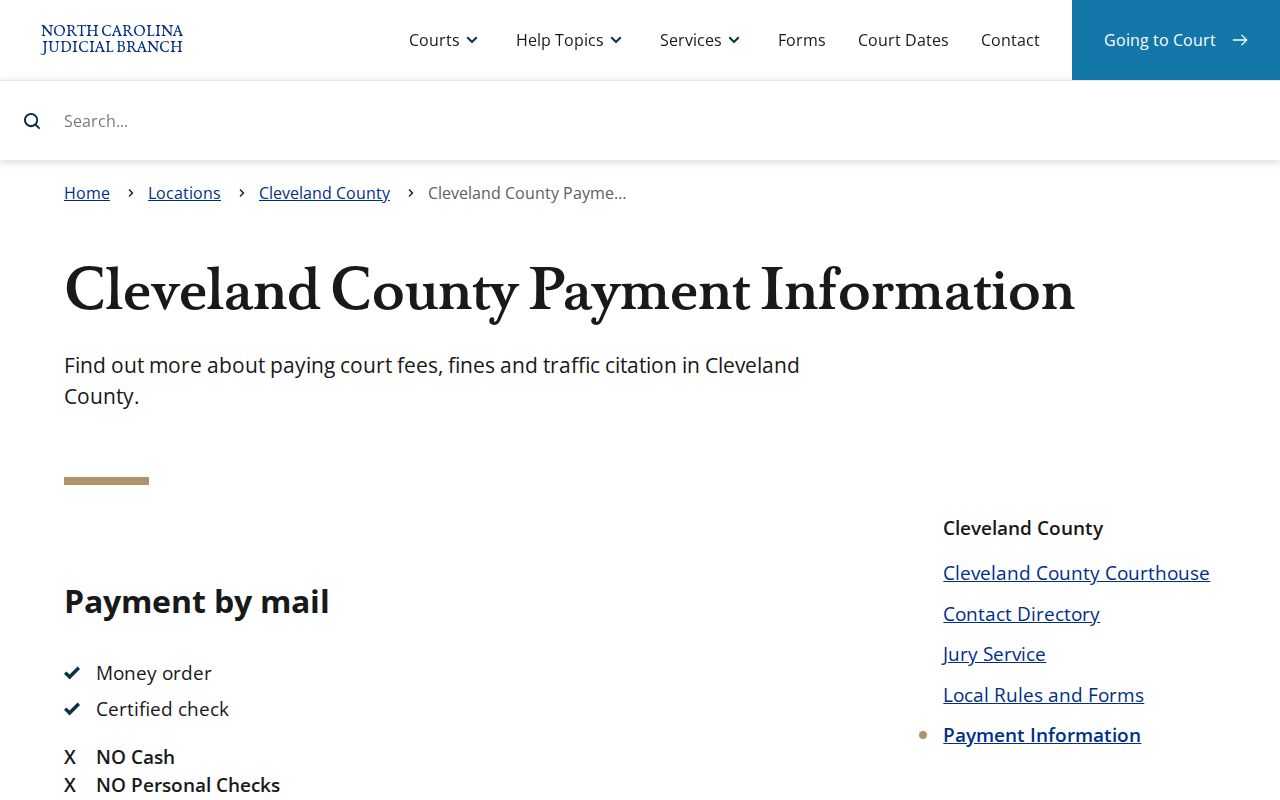
The payment information is relevant when ordering a certified search or resolving financial entries shown in a case summary.
Access & Restrictions
North Carolina law generally supports inspection of public Cleveland County court records. G.S. 7A-109 governs public inspection of court records, while Chapter 132 addresses public records more broadly. Public status does not require every file component to appear online. Sealed and confidential files, juvenile matters, protective orders, unreturned warrants, victim data, and Social Security numbers can be restricted or withheld from the public view.
If a Cleveland County file is absent from Portal, confirm spelling, case-number format, county location, category, and dates. Clear the browser cache or try a supported browser if the search behaves unexpectedly. Then contact the Clerk instead of assuming the case does not exist. Paper files are held in the county where filed, and a courthouse terminal can expose public search routes unavailable through a basic party query.
The NCAOC general public-record web form is not the route for Cleveland County case documents or background checks. Those requests belong with the county Clerk.
Note: A missing Portal result is not proof that no Cleveland County case or restricted judicial process exists.
Cleveland County Court Filing Limits
The Cleveland County Courthouse is at 100 Justice Place, Shelby, NC 28150. Published hours are weekdays from 8:30 a.m. to 5 p.m. Court Security screens entry with X-ray equipment and metal detectors. Local electronic-device policies may affect phones and recording, so check the current rule before bringing a device to inspect a file. Interpreter and accessibility services are available through the Judicial Branch for eligible court users.
The Cleveland County local rules and forms provide the current court-specific restrictions and resources.
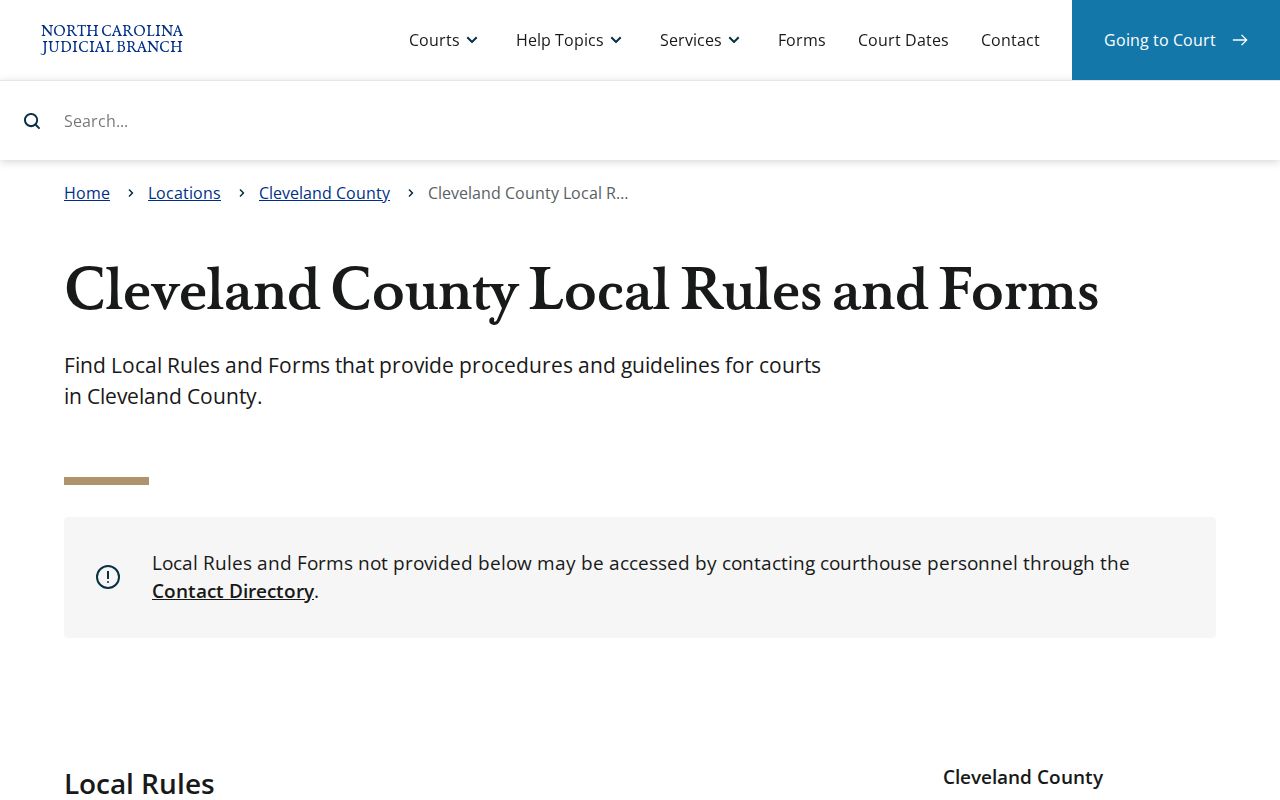
The local material helps a records visitor prepare for courthouse access without assuming that statewide Portal access answers every filing question.
Cleveland County is also building a consolidated Justice Center. Official commission records described a planned complex joining the Clerk, courts, district attorney, public defender, magistrates, Sheriff, and detention functions. Because occupancy remains an evolving fact, rely on the current Judicial Branch address and courthouse page before traveling. Do not infer that the new site has opened from a construction target alone.